After listening to the presentation on the 18th Century Business and Industry of Germany, it brought to my mind something worth researching. I know that the 3 centuries that we were told to research are clearly posted on the website, but I believe that there is a topic that has been mentioned quite frequently, but not talked about in depth: The Hanseatic League. Hamburg was the German city that my group was assigned with researching and was part of the Hanseatic League (even considers itself today), among many other cities. Even though the Hanse was not created during the first Industrial revolution of Germany and Europe, I think it helped set the stage for European, and especially, German industrialization.
It was believed to have formed around late 12th century when merchants in Northern Europe, the Baltic region, and along rivers in those areas saw the benefits of mutual trade agreements. Germans eventually noticed the great advantages of this trade by sea, and in turn colonists began establishing trade cities that today are some of Germany's largest.
The Hanse League was among one of the first such agreements in human history. Even though its birth happened centuries before the advent of the industrial age, it may have had a direct impact towards the signing of existing free trade agreements like EFTA and NAFTA. This was quite possibly the very beginning of human globalization. Merchants saw the advantages of cooperation and gained the ability to fend off pirates, raiders, high tariffs, and bring home goods that would otherwise be extremely expensive or unattainable altogether. Germany was one of the lasting powers in the Hanseatic League but eventually due to enemies of the pact, multiple wars, and corruption, the League disbanded. Since Germany had grown immensely through this efficient trade system, it didn't want to let that history go and kept the name of the Hanse in several cities like Bremen, Hamburg, and Lubeck, where many historical landmarks are yet preserved and admired. I found an interesting historical fact about Lubeck's refusal to allow Hitler's party to campaign in the city and forced him to speak in a nearby town. Frankly, it pissed him off and the Nazi's took away their privilege of naming themselves a "Free Hanseatic State
Germany's pride in their history and economic growth through the Hanse League may have something to do with the way they have adapted and led the way in many different areas of industrialization. There is a reputation to be lived up to as a forerunner in adaptation and innovation. Their ability to inherit industries and technologies from other advanced nations and improve on them could have stemmed from their past achievements with the Hanse. Despite several devastating wars Germany has since then become an economic power house, boasting one of the top 5 largest economies in the world and remains an icon in technology, Pharmaceuticals, vehicle production, and trade. They essential carry the Euro in today's struggling economy.
I was not aware of the rich history of the Hanse or Germany's involvement. No history class that I have ever taken (that I can remember) covered the Hanseatic League. I think this subject should be, at the least, slightly covered in today's high school European/World history courses here in the U.S. I would think that these landmarks are something worth visiting some day and hope to myself.
http://en.wikipedia.org/wiki/Hanseatic_League
Wednesday, October 24, 2012

Wednesday, October 17, 2012
Tuesday, October 9, 2012
All Quiet, CH. 10 Overview, Character Overveiw
Stanislaus Katczinsky
Kat, was the eldest, most experienced member
of the group that is followed in the book "All Quiet on the Western Front.He was
known for having a keen sense of finding food and things that the company
needed. Men, especially Paul, looked up to him. He discovers a box of lobster, a
goose, and other meals that the soldeirs are very grateful for. He often had an
answer for things that the young men asked and guided them in becoming good
soldiers. Kat, to me, was probably the most important character besides Paul. He
was definitely a father figure. When Paul and his 27 classmates made it to their
2nd company after training, he was the one to bring them in to the new unit and
teach them the new ways. I think his death towards the end of the book
symbolized that in war, everything and anyone can be consumed. Pual had never
expected Kat to succumb to the enemy because he had been fighting for so long
and was such a smart soldier. All it took was a random bomb and piece of
shrapnel to end his life, while being carried by Paul. At this poing Paul lost
all hope, or at least what small amount of hope was left. The war had consumed
everyone and everything that Paul knew and completely changed him, and by the
end of the book the war took him, too.
Sunday, October 7, 2012
- The use of the adults in a country to fight a war with the influential young.
- How the human being can withstand the world at its worst.
- An entire generation devastated by the previous' political choices.
- The end result of the war was the cause for the second one.
- Such a widely read book, from high school to college.
Wednesday, October 3, 2012

Chapter 10 is both a mix of how terrible the effects of war are and also that sometimes it can still hold some vestiges of humanity. Paul and his comrades find a supply dump, where they acquire all sorts of luxuries including ingredients to make pancakes and fresh produce. It was a nice break from the constant warfare but also very short lived because the enemy found their position and shelled it. This was an important piece to include because it showed that they could still relax and enjoy a more humane living standard no matter what the situation or how short lived it might be. Soon after this Paul ended up going to the hospital with his friend and learned that war was not just momentarily terrible, but it would have long lasting effects of horror afterwards. The multitude of wounds he sees at the hospital makes him realize that his generation will grow up scarred. But it isn't all bad, the hospital also shows the bond between soldiers that is built in the trenches. One of the patients wives shows up and in order for them to have any privacy the other soldiers needed to work together so they could enjoy their time together. In essence chapter 10 shows that although Paul's generation will have long term negative effects from the war, they are still people and will survive through their struggle. This chapter is mostly about mans ability to survive the harshness the world will throw at him and still come out as a human being.
Kantorek is a major character in the story and symbolizes the nationalistic pride that led the nation to war. he is an energetic man who preaches to his students about doing a duty to their country. Because the students are easily mailable it is easy to shape their ideology. Much like a king or emperor would do to promote their regime. The students look up to him at the beginning of the novel, but after they experience war for themselves they despise him. They led them into an inhumane and harsh war where there is constant death and agonizing wounds that will last their generation a life time.
Wednesday, September 19, 2012
"My work on the Overveiw of German Parties"
My group is doing our presentation on an overveiw of all the German parties. We started by collecting all of eachother's contact information. At the end of class last week, we all got together to make sure we knew who was in which group. Right away I could tell that the group leader was going to be Kari Anderson. She wasn't the only one, though, that seemed to want to take initiative. Many of the students in our group wanted to make sure that our project was done on time and in an efficient manner. She was the most proactive about getting everyone's contact information to make sure we could all keep in contact. The majority of the work done by our group was individual. Being that it was a large group, we did not have much time where we could all meet up. I don't think that this affected our work in a negative way, as with technology these days you don't really need to be in the same room physically to work together. We sent our information to Kari on google docs, where she and maybe some others put our data together and formed a powerpoint. The information that we collected is fairly basic for each party, but as it explains in our group title, "overveiw," I think that is the point. I focused on looking up information about current political news such as the current leaders and parties challenging each other for the next elections in 2013. I tried to look up very current news on political polls and elections going on in Germany. The most helpful sites that I found were BBC and CNBC.com. As always, wikipedia had plenty of information that was useful. I feel that the party that I would support if I were a german would be the current leading CDU. That parties seems to reflect the veiws of the party that I endorse here in the U.S. I think it is very interesting that Germany follows a Coalition government, which means multiple parties lead the country together. I think that this form of federal government would be the most equal way to govern a country, but not necessarily as efficient as one party. I wonder what the U.S. would be like if we adopted such a type of government. It seems, though, that German politics is kind of a mess with all of the different parties. It would be hard to chose just one party to endorse.
http://en.wikipedia.org/wiki/Politics_of_Germany
http://en.wikipedia.org/wiki/Politics_of_Germany
Overveiw of German political parties: what's in the news
Ge110f12DillonRA
Overview of German political parties
In recent news:
Angela Merkel,
chairwoman of the CDU, is the current
Chancellor of Germany. She and the CDU
defeated a SDP-Green coalition that was led by Gerhard Shroeder.
The current coalition includes the CDU/CSU and FDP.
The next elections for chancellor are in September, 2013.
SDP is the current opposition to the leading CDU. The top 3
candidates for chancellor from the SDP include Frank-Walter Steinmeier, SPD Chairman Sigmar Gabriel, and ex-Finance
Minister Peer Steinbrueck.
SDP currently leads
in the elections.
Sources:
Wednesday, September 5, 2012
HAMBURG
Monday, September 10, 2012

Hamburg
- Originally named Treva
- Home to 1.8 million people
- largest GDP in Germany, 50,000 Euros per ca pita
- Produces most of Countries Copper supply
- Port of Hamburg
- Broken into 6 districts, Bergedorf being the largest and least populated
- 1918 became a city state
- great fire in 1842
- Beatles became famous in Hamburg
- 2011 won most environmentally friendly and green capital of Europe
- most bridges in the world


Sources:
http://en.wikipedia.org/wiki/Hamburg
http://www.hafen-hamburg.de/node/2091
http://www.hafen-hamburg.de/node/2091
http://www.mapsofworld.com/cities/germany/hamburg/tradeindustry.html
http://www.britannica.com/EBchecked/topic/253231/Hamburg/16041/The-economy

Wednesday, September 5, 2012
Hamburg
 1. Hamburg
1.1 Hamburg is located in Northern Germany.
It is about 292 square miles and is home to 1.8 million people. People from
Hamburg can be called, "Hamburgers"1.2 Hamburg has the highest GDP in Germany at
50,000 Euros per capita. It is also a major industrial state and produces a lot
of the countries copper supply. Other major industries of Hamburg include
rubber, tobacco, crude oil and ship building. Hamburg is also known as the Port
of Hamburg which is responsible for more than half of West Germany's foreign
trade. In the year 2011 Hamburg's main trade partners were China, Russia and
Singapore. The major river that runs through Hamburg is the Elbe.1.3 Hamburg is broken into 6 districts with Bergedorf being
the biggest and least populated.


1.5 Before 1871: In 1834 Hamburg was designated
the seat of Roman Catholic Bishopric.
Hamburg was burned down and destroyed by Vikings
in 845. It was again burned down in 1201, 1241 and lastly in 1842 which was
known as the great fire which destroyed most of the inner city. From May 4th to
May 8th in 1842 was the conflagration which destroyed three churches and town
hall. The fire killed 51 people and left 20,000 people homeless. It took hamburg
over 40 years to rebuild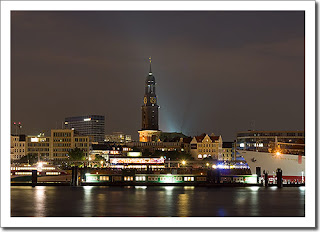 Before
1918: Hamburg adopted the republican constitution and became a city- state. In
the second half of the 19th century the population ofHamburg quadrupled in
size.
Before
1918: Hamburg adopted the republican constitution and became a city- state. In
the second half of the 19th century the population ofHamburg quadrupled in
size.
Before 1948: During WWII Hamburg had Allied air raids that destroyed more than half of the city. In 1943 a firestorm came from results of the bombings and completely destroyed neighboring cities such as Hammerbrok. This bombing killed around 42,600 civilians.
2. The Beatles became famous from playing in clubs in Hamburg.
In 2011 Hamburg was named Europe's green capital and most environmentally friendly.
Hamburg has more bridges than any other city in the world.
Hamburg was originally names Treva but got its name from the Emperor Charlamagne who ordered the first building on site which was a castle on a rocky terrain.
 Before
1918: Hamburg adopted the republican constitution and became a city- state. In
the second half of the 19th century the population ofHamburg quadrupled in
size.
Before
1918: Hamburg adopted the republican constitution and became a city- state. In
the second half of the 19th century the population ofHamburg quadrupled in
size.Before 1948: During WWII Hamburg had Allied air raids that destroyed more than half of the city. In 1943 a firestorm came from results of the bombings and completely destroyed neighboring cities such as Hammerbrok. This bombing killed around 42,600 civilians.
2. The Beatles became famous from playing in clubs in Hamburg.
In 2011 Hamburg was named Europe's green capital and most environmentally friendly.
Hamburg has more bridges than any other city in the world.
Hamburg was originally names Treva but got its name from the Emperor Charlamagne who ordered the first building on site which was a castle on a rocky terrain.
Fun Fact:
There is a street in Hamburg called, Reeperbahn in the St. Pauli district.
It is described by some as, "die sündige Meile (the sinful
mile)."
3. Resources
http://en.wikipedia.org/wiki/Hamburg
http://www.hafen-hamburg.de/node/2091
3. Resources
http://en.wikipedia.org/wiki/Hamburg
http://www.hafen-hamburg.de/node/2091
http://www.mapsofworld.com/cities/germany/hamburg/tradeindustry.html
http://www.britannica.com/EBchecked/topic/253231/Hamburg/16041/The-economy
http://www.britannica.com/EBchecked/topic/253231/Hamburg/16041/The-economy
Subscribe to:
Posts (Atom)